
Muzzle training is an important part of responsible sighthound ownership. You will need a muzzle that fits your dog well and introduce the muzzle in a positive way, so they don't resent wearing it.
Why it's worth training your dog to wear a muzzle
Whilst not every sighthound needs to wear a muzzle when out walking, there are many reasons to for it, including:
- To prevent dogs with high prey drive from hurting cats and wildlife
- To prevent fearful/defensive dogs from biting people or other dogs
- To prevent dogs from picking up and eating dangerous items on walks
- To ensure safety during veterinary handling (especially in emergencies)
The majority of ex-racing greyhounds are used to wearing a muzzle, and are totally comfortable wearing one. However, this is not always the case, and sighthounds who are not from a racing background may never have worn a muzzle. It is always worth muzzle training your dog, even if they have no behavioural issues and are normally happy with veterinary handling.
If your dog has injured himself and is in severe pain, he may panic and try to prevent people from touching the affected area, even if he is normally comfortable with handling. He may attempt to bite the vet, making it unsafe for them to provide emergency treatment. In this situation a muzzle is essential - if your dog is not used to being muzzled, having one forced upon him will add to his already heightened stress levels.
Muzzle training isn’t difficult, and most dogs take to it very quickly. By following the steps below, you can teach your dog to willingly have their muzzle fitted, and to feel comfortable whilst wearing it.
Choosing a muzzle: types of muzzles

If you've adopted a dog with us at Forever Hounds Trust, your hound is supplied with a properly fitted muzzle at the time of adoption. If you have adopted a puppy, or if your muzzle gets damaged you should replace it in a timely fashion.
If your dog will be wearing his muzzle during exercise or for long periods, we would always recommend a basket muzzle. These “cage” style muzzles are usually made of plastic, and allow dogs to pant and drink normally. Greyhound and lurcher specific basket muzzles are available in various sizes, and are designed to suit the longer snout of the sighthound. If you have adopted a bull lurcher (or any dog with a wider face) you may find that a Baskerville or Baskerville Ultra muzzle is a better fit.
For short periods of use (such as during a veterinary appointment) you may prefer to use a fabric muzzle. Fabric muzzles may look more comfortable, and are often favoured over the basket muzzle, but are not safe to be worn during exercise or for long periods. This is because they do not allow the dog to pant or drink, leading to heat exhaustion, which can be fatal. If your dog is able to pant and drink whilst wearing a fabric muzzle, it is not fitted correctly and will not prevent a bite.
You can buy sighthound muzzles through the Forever Hounds Trust Shop on our website.
Introducing the muzzle to your dog
Step 1: Creating positive associations
Place the muzzle on the ground, with a few treats sprinkled in and around it to encourage your dog to investigate. The straps should be wide open so that your dog doesn’t get stuck. Allow your dog to eat the treats, and repeat. Relocate the muzzle each time you do this - we want your dog to associate the treats with the muzzle, not the area the muzzle is in.
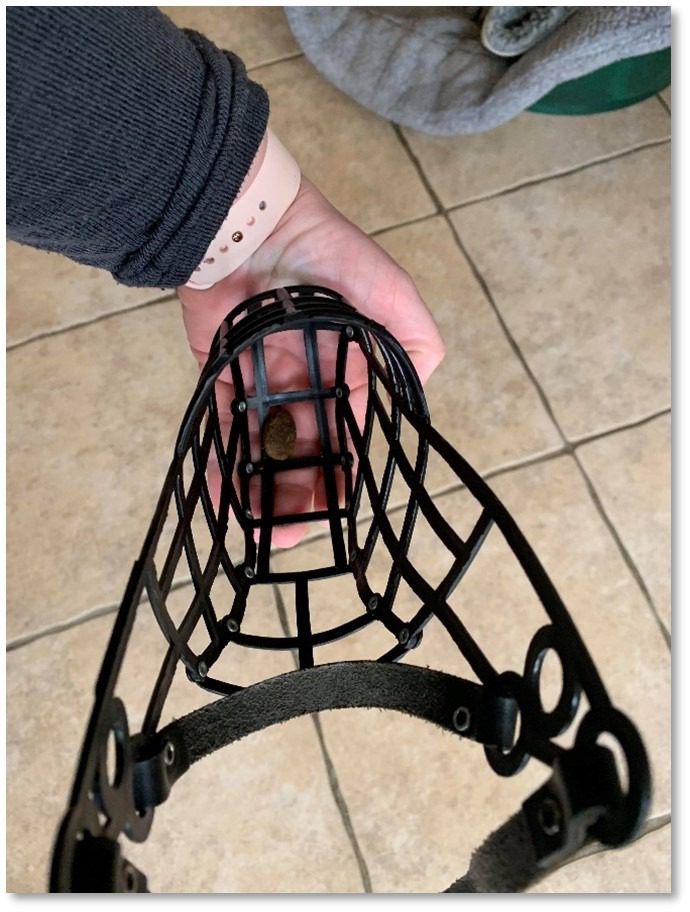
Once your dog is showing plenty of interest in the muzzle, hold it up with the opening facing outwards. Every time he touches or sniffs the muzzle, mark the behaviour (with a clicker, or a word such as “yes!”) and reward with a treat. Keep your hand still whilst your dog is eating, to avoid pushing the muzzle towards your dog.
Step 2: Encouraging contact with the muzzle
Once your dog is actively touching the muzzle for a treat, begin feeding the reward from inside the muzzle. Soft foods like peanut butter are great for this, as they can be smeared onto the inside of the muzzle. Alternatively, you can use something like liver paste which can easily be squeezed through the holes in the muzzle, or hold treats against the end of the muzzle with your cupped hand. Reward inside the muzzle every time your dog puts his nose into it.
When your dog is happily pushing his nose into the muzzle for his reward, begin to tilt the muzzle so that the end of the muzzle points upwards (as if the dog is looking up at you). Continue to reward from inside the muzzle, ideally rewarding 3-5 times before taking the muzzle away from your dog’s face.
Step 3: Keep the muzzle on (without fastening it)
Once your dog is happily sticking his nose inside the muzzle in this new position, let go of the muzzle whilst his nose is inside. Keep rewarding through the holes in the muzzle as long as he keeps his head up, with the muzzle on his snout. Make sure to feed from above, so he doesn’t have to lower his snout to take the treats. Stop rewarding the moment he lowers his head, dropping the muzzle.
Step 4: Fastening the muzzle
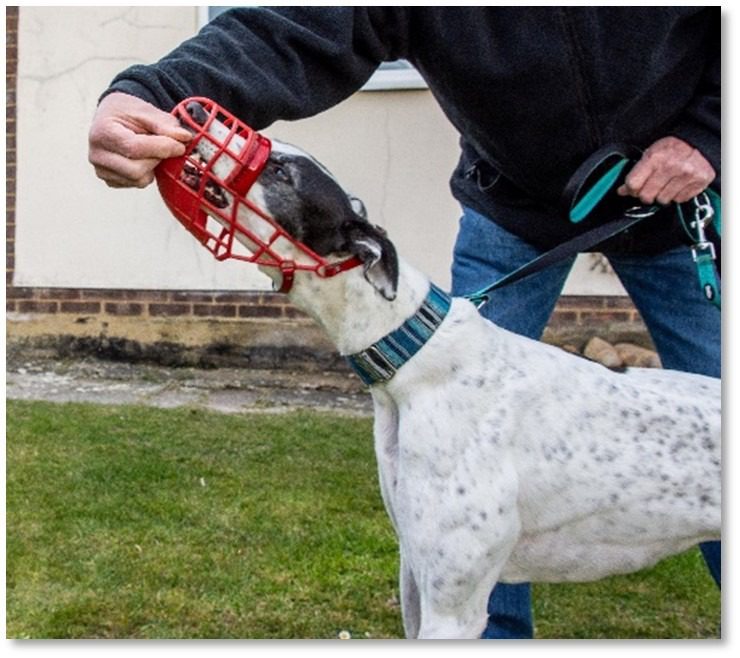
Build up the amount of time your dog is able to hold the muzzle on his nose whilst being rewarded, until you have enough time to fasten the muzzle at the back of his head. Continue to reward whilst the muzzle is done up. Start with only very short periods with the muzzle fastened, and build the time up gradually.
Gradually increase the amount of time between each reward whilst your dog is wearing the muzzle, until you are able to reward once every few minutes or so. Try moving around and calling your dog to you whilst he is wearing the muzzle, rewarding him each time.
Step 5: Practice wearing the muzzle
Go for a short walk with the muzzle on, rewarding your dog frequently for walking alongside you while wearing the muzzle. As your dog gets used to wearing the muzzle, you can reward less frequently.
Practice grooming and checking your dog over with the muzzle on, rewarding regularly.
If your dog paws at the muzzle after training, interrupt him with a positive verbal cue (such as “hey!”) and reward movement back to you. If your dog is pawing at the muzzle at any point through the training, go back a step and reduce the time in between food rewards.
Stick to short training periods, and practice once or twice per day. If you try to practice for very long periods, your dog may get bored and lose interest!
More behavioural advice of FHT dogs
If you find your dog is struggling to accept the muzzle, if you have a Forever Hounds Trust Dog, please get in touch with us for free advice.